
Sometimes a relatively small adaptation can make an everyday activity easier. The challenge is that individual needs differ, making standardised solutions unsuitable in some situations.
3D-YES explores how assistive technology and 3D printing can help young people develop personalised solutions while learning valuable digital and creative skills.
Why Personalisation Matters
People with motor disabilities can experience different challenges depending on their individual physical characteristics and everyday activities.
This is why 3D-YES focuses on personalised or customised devices rather than taking a one-size-fits-all approach.
Possible creations may include adapted handles, hooks, cutlery, glasses or other small devices designed around individual needs.
Designing With People, Not Simply for Them
Inclusive design starts with understanding the person who will use a product.
Associations supporting people with motor disabilities have an important role within 3D-YES. They help identify real needs and ensure that proposed solutions are relevant, accessible and meaningful.
This approach encourages young participants to listen, understand a challenge and develop their ideas around genuine user requirements.
Where 3D Printing Fits In
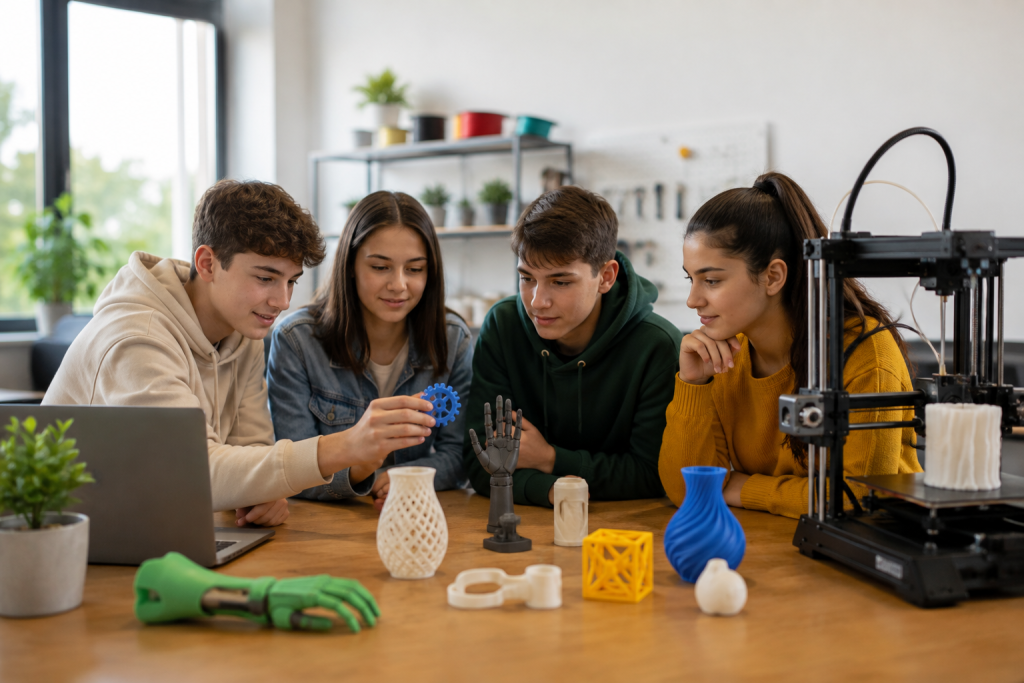
3D printing makes it possible to move from a digital design to a physical prototype that can be reviewed and improved.
Through the project’s training, participants learn about digital design, prototyping, material selection, printing and product testing.
The process encourages experimentation. A design does not need to be perfect immediately. Participants can identify areas for improvement and refine their work.
Combining Inclusion and Digital Learning
Creating 3D-printed assistive devices gives technical education a clear social context.
Young people can see how digital skills may be applied beyond the classroom while learning to consider accessibility, usability and individual needs.
At the same time, the project demonstrates the potential of affordable, customised assistive objects to support greater autonomy and participation.
Innovation Starts With Understanding
Technology alone does not make a solution inclusive. The value comes from understanding a need and applying technology appropriately.
By bringing young people and disability-support organisations into the creative process, 3D-YES aims to make inclusive innovation practical, collaborative and centred on people.
FAQ
What types of assistive objects could participants create?
Examples include adapted handles, hooks, cutlery, glasses and other small personalised devices.
Why use 3D printing for personalised devices?
3D printing allows digital designs to be prototyped, tested and adjusted according to specific requirements.
Are people with motor disabilities involved?
Yes. Relevant associations help identify needs so that solutions can be developed with users in mind.